
Last Updated: November 11, 2026
Quick Summary
Rat droppings in wall cavities are a serious health hazard because dried waste releases contaminated dust into living spaces, which you can breathe in without ever seeing a rat. The main UK concern is leptospirosis, a bacterial infection spread through rat urine that enters the body through cuts, grazes, or the eyes, nose and mouth.
- Scratching and scurrying noises in walls at dusk or before dawn are the clearest early sign of rats.
- Never dry sweep or vacuum droppings, as this sends contaminated dust into the air.
- Wear disposable gloves, a face mask and eye cover, and use a P2 or P3 respirator if dust is likely.
- Do not open a contaminated wall cavity yourself; a pest controller should assess it first.
- Rats gnaw cables constantly, creating fire risk and costly rewiring.
Table of Contents
- Why Rat Droppings in Wall Cavities Are a Hidden Health Hazard
- Signs of Rats in Walls: What to Listen and Look For
- Rat Droppings Health Risks: From Leptospirosis to Contaminated Dust
- How to Confirm Droppings Are in a Cavity Rather Than Elsewhere
- How to Clean Rat Droppings Safely: Step-by-Step Guidance
- When to Bring in Professional Rat Control
- Building Damage and Long-Term Consequences of Cavity Infestation
- Book a Professional Assessment for Your Property
- Frequently Asked Questions
Why Rat Droppings in Wall Cavities Are a Hidden Health Hazard
Rat droppings in wall cavities are a serious problem because the waste sits out of sight, dries slowly, and releases contaminated dust into the rooms you live in.
The cavity between your inner and outer walls is dark, warm and undisturbed. Rats thrive there. Their droppings and urine build up for months before anyone notices a smell.
That matters because dried rodent waste does not stay put. Air movement through gaps, sockets and pipework carries fine particles into living spaces. Anyone nearby can breathe them in without ever seeing a rat.
Below, we explain what the real risks are, how to spot the signs, and how to deal with the mess safely.
Signs of Rats in Walls: What to Listen and Look For
Scratching and scurrying noises in walls, usually at dusk or before dawn, are the clearest early sign of rats in walls. Rats are most active when the house is quiet, so listen for movement above ceilings and behind plasterboard.
Other signs worth checking:
- Gnaw marks on pipework, cables or timber near gaps and entry points
- Grease smears along skirting boards and brickwork where rats brush past
- A musky, ammonia-like odour that gets stronger in warm rooms
- Small dark droppings near loft hatches, sockets or under floors
- Torn loft insulation, often shaped into a rough nest
Watch out: hearing noise in one wall does not prove the nest is there. Rats travel along cavity walls and drainage routes, so activity in a bedroom wall may trace back to a gap at the roofline or a broken drain outside.
Rat Droppings Health Risks: From Leptospirosis to Contaminated Dust
Rat droppings health risks come from bacteria, viruses and parasites carried in rodent waste. The main danger is not touching a dropping, it is breathing in dust from waste that has dried out and been disturbed.
In the UK, the most relevant concern is leptospirosis, a bacterial infection spread through rat urine. Early symptoms resemble flu, fever, headache, muscle pain, and can progress to more serious illness in a small number of cases (the NHS).
Other organisms associated with rodent waste include:
- Salmonella and other bacteria that can transfer onto worktops and food-preparation areas
- Parasites such as ticks and mites that move from rodents onto pets and people
- Hantavirus, present in the UK in some rodent populations, though human cases are extremely rare and usually linked to occupational exposure
- Rat-bite fever, uncommon and typically requires a bite or scratch
It is worth being clear about relative risk. Most people who live alongside rats never become seriously ill. The risk rises with the amount of waste, how dry and disturbed it is, and how much time is spent in enclosed spaces where dust accumulates.
How Infection Spreads Through a Property
Infection spreads through three main routes: inhalation, ingestion and direct contact.
- Inhalation. Dried droppings break down into contaminated dust. Draughts through sockets, lofts and floorboards lift it into the air. This is the route most relevant to cavity contamination, because the waste is enclosed and undisturbed until something disturbs it.
- Ingestion. Rats cross worktops and food-preparation areas. Bacteria transfer onto surfaces, utensils and uncovered food.
- Direct contact. Handling waste without gloves, or touching a surface and then your face, moves bacteria into the body.
Contaminated dust is the route most homeowners underestimate. You cannot see it, and a room can look clean while the air is not. The practical implication is that any work which disturbs a contaminated cavity, cutting into plasterboard, lifting floorboards, pulling out insulation, should be treated as a dust-generating activity and planned accordingly.
How to Confirm Droppings Are in a Cavity Rather Than Elsewhere
Confirming cavity activity means ruling out the obvious places first. Check lofts, under sinks, behind appliances and along skirting boards before assuming the wall cavity is the source.
A practical sequence:
- Look for droppings in the loft, especially near insulation edges and roof timbers
- Check behind kitchen units and under the sink for urine staining
- Inspect the outside wall for gaps in brickwork, around pipework and at the roofline
- Listen at dusk in each room to map where the noise starts and stops
- Look for droppings on top of cavity wall ties or ledges visible through vents
If droppings only appear near a wall, and the smell is strongest in one room, the cavity is the likely location. A pest controller can confirm this with an inspection.
How to Clean Rat Droppings Safely: Step-by-Step Guidance
Cleaning rat droppings safely means protecting your airways first, then removing waste without dry sweeping or vacuuming, which sends contaminated dust into the air. The steps below apply to droppings you can see and reach, on floors, skirting boards or surfaces.
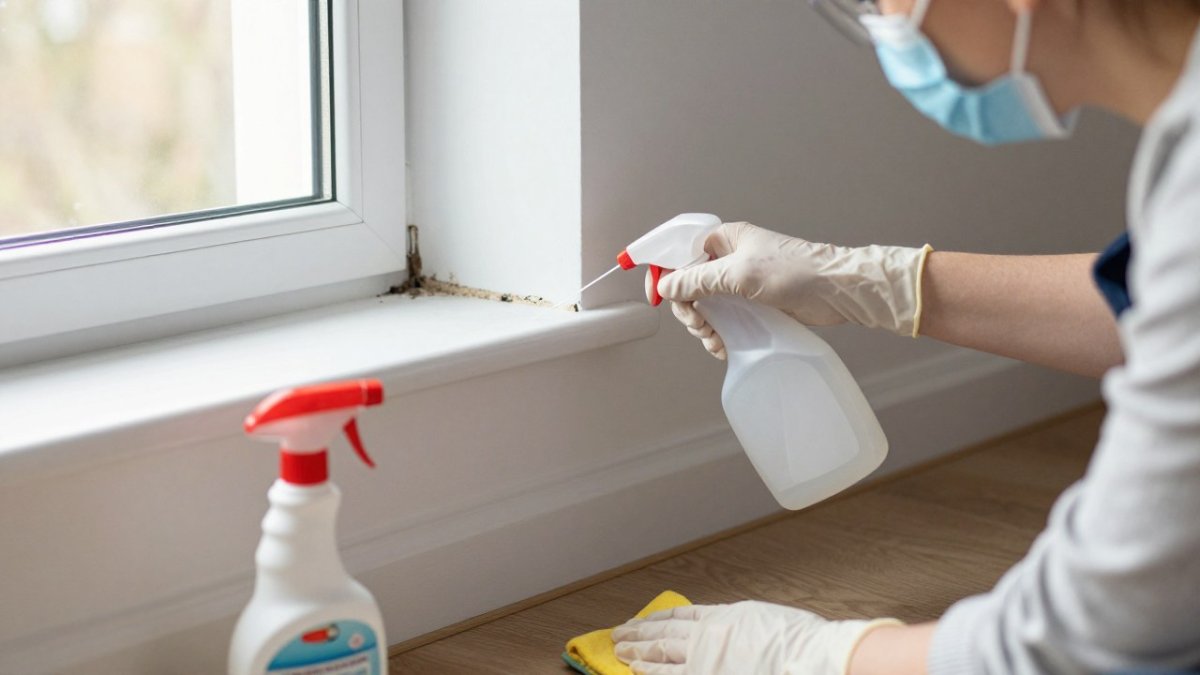
For accessible droppings, follow these steps:
- Ventilate the area. Open windows and doors and keep people and pets out of the room while you work.
- Put on protection. Disposable gloves, a face mask and eye cover as a minimum. A P2 or P3 respirator is better than a surgical mask if dust is likely.
- Wet the waste. Spray a disinfectant solution onto droppings and surrounding surfaces. Never dry sweep, wetting binds the dust and stops it becoming airborne.
- Remove with paper towels. Wipe up rather than sweep. Double-bag everything and seal it before binning with general waste.
- Disinfect again. Wipe skirting boards, floors and any surface within reach of the waste with a fresh disinfectant solution.
- Wash up. Remove gloves last, then wash hands and forearms thoroughly with soap and warm water.
Watch out: a standard domestic vacuum cleaner will aerosolise fine contaminated dust and spread it through the room.
When Not to Disturb Cavity Waste Yourself
If the droppings are inside the cavity itself, do not open the wall yourself. Disturbing a contaminated cavity releases far more dust than cleaning a surface, and the waste may be spread across insulation, wall ties and brickwork in places you cannot see or reach.
Signs that cavity cleanup is a specialist job include:
- A strong, persistent odour that returns after surface cleaning
- Visible droppings around sockets, vents or loft hatches that suggest waste inside the cavity
- Soiled or torn insulation that may be holding contaminated material
- Any history of rats being present for months rather than days
- Occupants who are pregnant, asthmatic, immunocompromised or very young
In these cases, a pest controller should assess the cavity and advise on the next steps. Our guide on how to clean mouse droppings safely covers the surface-cleaning method in more detail, but the same principle applies: do not create dust you cannot control.
What to Do After Cleaning
Cleaning removes the mess, not the cause. Rats will return to the same cavity unless the entry points are closed.
Check the outside of the property for gaps around pipework, broken air bricks, damaged brickwork and gaps at the roofline. Seal what you can with suitable materials, and fix any drainage faults that give rats a route in.
Our guide on how to stop rats returning covers proofing in more detail. Expect to review it more than once: proofing is a job that needs checking after storms and seasonal changes.
For droppings you can see and reach, work through these steps in order.
| Step | What to do | Key point |
|---|---|---|
| 1 | Ventilate the area | Open windows and doors; keep people and pets out |
| 2 | Put on protection | Disposable gloves, face mask and eye cover; P2 or P3 respirator if dusty |
| 3 | Wet the waste | Spray disinfectant solution; never dry sweep |
| 4 | Remove with paper towels | Wipe up, double-bag and seal before binning |
| 5 | Disinfect again | Wipe skirting boards, floors and nearby surfaces |
| 6 | Wash up | Remove gloves last, then wash hands and forearms |
When to Bring in Professional Rat Control
Professional rat control is the right call when droppings are inside a cavity, when the infestation keeps returning, or when the property has vulnerable occupants. Surface cleaning will not fix a contaminated wall.
Call in help if any of these apply:
- Droppings or a strong odour persist after cleaning
- You have seen rats during the day, which suggests a large population
- The property has young children, pets, or anyone with a weakened immune system
- You are a landlord or run a food business and need documented, hygienic treatment
- Previous DIY attempts have failed and the problem has come back
Our team handles rodent proofing to seal entry points properly, and we advise on preventing pest reinfestation after professional treatment so the fix holds.
Building Damage and Long-Term Consequences of Cavity Infestation
Long-term cavity infestation damages the building itself, not just the air quality. Rats gnaw constantly to keep their teeth worn down, and wall cavities give them plenty to chew.
The damage usually shows up as:
- Chewed cables, which create fire risk and costly rewiring
- Damaged pipework, leading to leaks inside walls
- Compromised loft insulation, which loses performance once it is torn and soiled
- Weakened mortar and brickwork where rats burrow near entry points
- Persistent odour from dead rodents that cannot be reached without opening the wall
Left alone, a cavity infestation becomes a building repair job as much as a pest job.
Book a Professional Assessment for Your Property
A professional assessment confirms what is in the cavity and what needs to happen next. Guessing wastes time and risks spreading dust through the house.
At ProPest Oxford Ltd, our technicians hold a minimum RSPH Level 2 qualification and are associated with NPTA and BASIS PROMPT. We focus on finding the source of the infestation rather than treating the symptoms. We offer same-day or next-day appointments and work seven days a week, and we are fully insured.
If you want to know how quickly pest control can attend your property, our team can confirm availability when you call.
Rats in a wall cavity will not resolve on their own, and the waste keeps building while you wait. Get a proper assessment before the damage spreads to wiring, insulation or the structure itself.
Frequently Asked Questions
Are rat droppings in wall cavities dangerous?
Yes. Rat droppings can carry bacteria such as those causing leptospirosis and viruses, and when they dry out, contaminated dust can be inhaled. The risk increases if droppings are disturbed without protective equipment. If you suspect droppings in a cavity, avoid disturbing the area and arrange a professional assessment.
How can you tell if rats are living in a wall cavity?
Listen for scratching or scurrying noises, especially at night. Look for droppings near skirting boards, gnaw marks on pipework or cables, and greasy rub marks along walls. A persistent odour may also indicate a nest or dead rodents. If you notice several signs of rats in walls, contact a qualified pest controller to confirm the source rather than relying on guesswork.
Should you remove rat droppings from a wall cavity yourself?
It is not advisable. Disturbing droppings without proper protective equipment can release contaminated dust and increase rat droppings health risks. Cavity spaces are difficult to access safely and may contain other hazards. For peace of mind, book a specialist assessment.
How long can rat droppings remain infectious?
There is no single answer because it depends on the pathogen, moisture and temperature. Some viruses and bacteria can survive for days or weeks in favourable conditions. Dried droppings pose a particular inhalation risk when disturbed. Rather than waiting for them to become harmless, treat any droppings as potentially infectious and arrange safe removal. A pest controller can advise on disinfection and prevention.
