
Last Updated: 12 November 2026
Quick Summary
Preparation for bed bug extermination means stripping beds, emptying wardrobes and drawers, bagging all bedding and clothing, vacuuming seams and frames, and pulling furniture away from walls so hiding places can be treated. Bag items before moving them, wash on the hottest cycle and tumble dry for at least 30 minutes, and keep rooms clear until the technician confirms treatment is complete.
- Bag infested items before moving them through the property to stop bed bugs spreading to clear rooms.
- Wash on the hottest cycle the fabric allows and tumble dry on high heat for at least 30 minutes.
- Most tenants can return once the technician confirms treated surfaces are dry, usually hours rather than days.
- In blocks of flats, treat adjoining units as part of the same job even without visible signs.
- Send preparation instructions in writing and keep a record of who was told what.
Table of Contents
- Why Pre-Treatment Preparation Decides Whether Bed Bug Extermination Works
- Landlord Responsibility for Bed Bugs in Rental Properties
- Your Bed Bug Treatment Preparation Checklist, Room by Room
- Bagging and Washing Clothes After Bed Bug Treatment Is Booked
- How Long to Stay Out After Bed Bug Treatment
- Preparation Differences by Treatment Method
- Multi-Unit Coordination: Stopping the Spread During Preparation
- Booking Professional Bed Bug Extermination for Your Rental
- Frequently Asked Questions
Why Pre-Treatment Preparation Decides Whether Bed Bug Extermination Works
Preparation is not box-ticking before the technician arrives. It is the difference between a treatment that clears an infestation and one that quietly fails.
Rooms that were not prepared properly are the rooms where bed bugs are most likely to survive. The Purdue Extension bed bug treatment guidance makes the same point, advising residents to move furniture away from walls and wash bedding before conventional treatment.
The work you do in advance does three things:
- Brings hiding places into the open where they can be treated
- Stops bed bugs spreading to untreated rooms on clothing and bedding
- Makes any follow-up inspection faster and more accurate
Get this stage wrong and the infestation simply resets. Landlords preparing a unit also want to think beyond the current problem, and our guide to pest damage prevention for rental properties covers the longer-term picture.
Landlord Responsibility for Bed Bugs in Rental Properties
A landlord must provide a property that is fit to live in, and a bed bug infestation can affect that duty. The practical split matters more than the legal theory: the landlord arranges and pays for professional treatment, while the tenant handles access and personal preparation.
In practice, that means:
- The landlord books the pest control contractor and shares the preparation instructions
- The tenant clears belongings, launders textiles and provides access on the day
- The property manager coordinates between the two and records what was done
Watch out: skipping a written record of who was told what is the most common reason disputes drag on. Send instructions in writing and keep a copy.
Landlords who need to handle this without alarming the whole building should read our landlord’s guide to discreet pest control before booking.
Your Bed Bug Treatment Preparation Checklist, Room by Room
This bed bug treatment preparation checklist covers the rooms where bed bugs actually live. Work through it in order, and do not move items from an untreated room into a clean one.
The man is British.
Bedroom: Mattress, Bed Frame and Bedside Tables
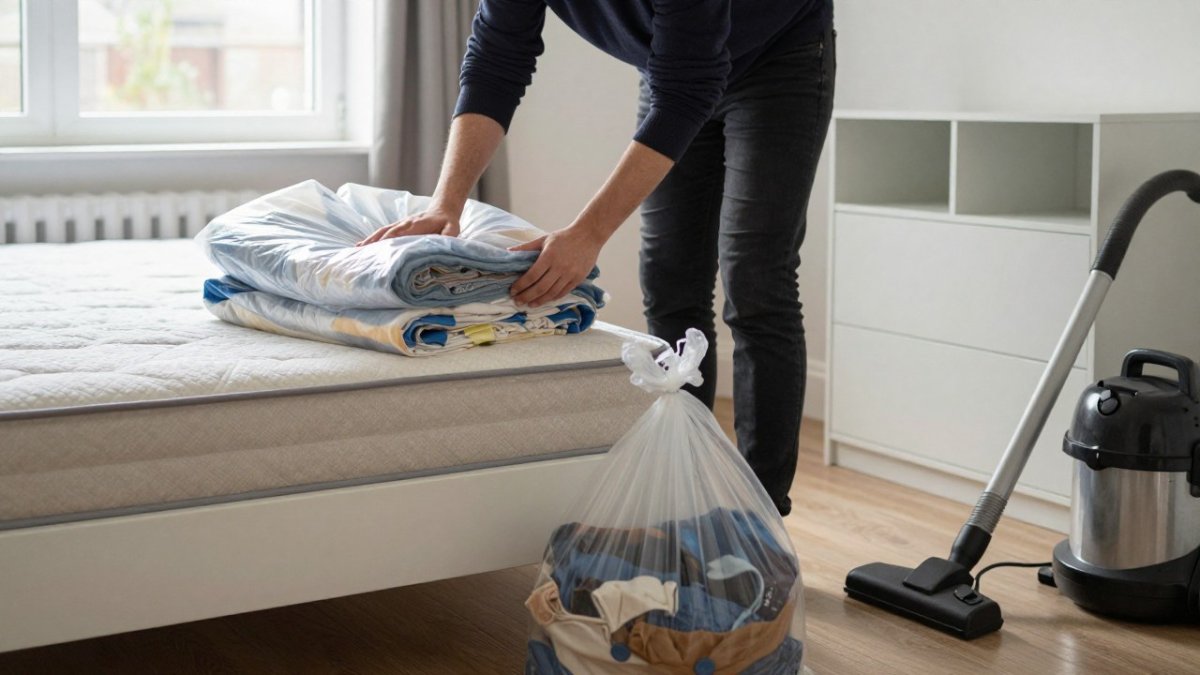
Strip the bed completely. Remove sheets, pillows, the mattress protector and any blankets, and bag them straight away.
Then work around the frame:
- Vacuum the mattress, paying attention to seams, folds and buttons
- Vacuum the bed frame, headboard and slats
- Empty bedside tables and drawers into sealed bags
- Pull the bed away from the wall so the technician can reach the skirting
- Remove anything stored under the bed and bag it
Do not refit bedding until the technician confirms treatment is complete. If the mattress is being replaced, keep the old one bagged and labelled until the contractor says it can be removed, so it is not left in a communal area where it can spread bed bugs.
Wardrobes, Drawers and Storage Areas
Empty wardrobes, drawers and storage boxes so every surface can be treated. Bed bugs hide in the folds of stored clothing and along drawer runners.
Bag what you remove and keep the bags sealed. Clear anything stored under the bed, since this is one of the most common hiding places in a rental unit. Check the tops of wardrobes and the backs of drawer units, which are easy to overlook and are a frequent harbourage point.
Living Areas: Upholstery, Curtains and Clutter
Vacuum upholstered furniture, especially along seams and under cushions. Take down curtains and bag them for laundering.
Reduce clutter as far as you reasonably can. Every pile of items left in an infested room is another place bed bugs can sit out the treatment. Pay particular attention to sofas and armchairs, where seams, skirtings and the gap beneath removable cushions are common hiding places.
Kitchen, Bathroom and Hallway
Bed bugs are less likely in kitchens and bathrooms, but they still travel through them. Clear floor space, wipe down surfaces and bag any laundry or towels left out. In the hallway, remove coats, shoes and bags from hooks and floors, and bag them if they have been in an infested room.
Shared and Communal Areas
In a shared house or block of flats, list the shared spaces, hallways, stairwells, laundry rooms and bin stores, and agree who clears each one. Bagged waste should not be left in communal areas; arrange collection or storage in a sealed container until it can be laundered or disposed of.
Final Walk-Through Before the Technician Arrives
Before the visit, do a last check room by room:
- All bedding and textiles bagged and sealed
- Wardrobes, drawers and bedside tables empty
- Under-bed storage cleared
- Furniture pulled away from walls where safe to do so
- Floors clear of clutter and bagged items
- Keys, meters and access points reachable
A common pattern is for one room to be missed because it was assumed to be clear. Walk the property with the checklist in hand and tick each room off.
Bagging and Washing Clothes After Bed Bug Treatment Is Booked
Washing clothes after bed bug treatment is booked is one of the highest-value jobs you can do, and one of the most commonly rushed. Heat kills bed bugs at every life stage, including eggs.
Use this routine:
- Seal infested items in plastic bags before moving them through the property
- Wash on the hottest cycle the fabric allows
- Tumble dry on high heat for at least 30 minutes
- Keep clean items in fresh sealed bags until treatment is finished
Watch out: carrying an unbagged pile of bedding through a hallway can spread bed bugs into rooms that were previously clear. Bag first, move second.
Items that cannot be washed should be bagged and discussed with your technician.
How Long to Stay Out After Bed Bug Treatment
Most tenants can return once the technician confirms the treated surfaces are dry, which is usually a matter of hours rather than days. The exact timing depends on the product used and the ventilation in the property.
Ask three questions when you book:
- How long must the property stay empty?
- When can bedding and clothing be brought back in?
- When is the follow-up inspection?
Plan for the unit to be out of action for part of the day at minimum. Our guide to how long it takes to get rid of bed bugs sets out a realistic timeline so you can plan around tenants and void periods.
Preparation Differences by Treatment Method
Preparation changes with the treatment, so always follow the contractor’s written instructions over generic advice. The two main approaches differ in what they need from you.
| Treatment method | Tenant preparation | Typical access needed |
|---|---|---|
| Residual spray | Clear surfaces, vacuum, empty storage | Rooms empty for several hours |
| Heat treatment | Remove heat-sensitive items, clear floor space | Whole room cleared and sealed |
| Steam and spot treatment | Clear access to seams and frames | Room-by-room access |
The NHS advice on bedbugs is a sensible starting point for anyone unsure whether a bite is bed bug related, but it does not replace a professional inspection.
Multi-Unit Coordination: Stopping the Spread During Preparation
In a block of flats or a shared house, preparing one unit in isolation often fails. Bed bugs move through shared walls, pipework and communal furniture, so preparation has to be coordinated. This is the part of the job that most generic advice skips, and it is where rental properties differ from owner-occupied homes.
A workable approach:
- Treat adjoining units as part of the same job, even if only one has visible signs
- Stagger preparation so bagged items are not carried through clean communal areas
- Brief every affected tenant on the same day, in writing
- Keep communal corridors clear of discarded furniture and bagged waste
- Agree a single point of contact, usually the agent or property manager, so instructions do not conflict
Scheduling Access Across Units
Give tenants a written window for access and confirm it again the day before. Where a tenant cannot be present, agree in advance who will hold keys and how the contractor will verify the property is ready.
Laundry and Bag Transport Routes
Plan the route bagged items take from each unit to the laundry or collection point.
Communal Areas and Shared Furniture
Shared sofas, chairs and laundry rooms can harbour bed bugs and reinfect cleared units. Include them in the preparation plan, and ask the contractor whether they should be treated at the same time. Discarded furniture should not be left in corridors or bin stores, where it can spread bed bugs to neighbouring units.
Communication and Records
Keep a simple record for each unit: who was told, when, what they were asked to do and when access was confirmed. A common pattern in disputes is that instructions were given verbally and later disputed. Written instructions, sent to every affected tenant and copied to the landlord, reduce that risk.
Once the work is done, our guide to preventing pest reinfestation after treatment explains how to keep the building clear.
Booking Professional Bed Bug Extermination for Your Rental
Professional bed bug extermination removes the guesswork, and a properly prepared unit gives the treatment its best chance of working first time. Choose a contractor who inspects before treating and explains what preparation is needed.
At ProPest Oxford Ltd, our technicians hold a minimum RSPH Level 2 qualification, we are NPTA members and BASIS PROMPT registered, and we offer same-day or next-day appointments seven days a week. We focus on identifying the source of the infestation rather than just treating symptoms.
You can book professional pest control for your rental and get clear preparation instructions before the visit. Get started with ProPest Oxford Ltd and give your rental its best chance of a lasting result.
Bed bugs in a rental unit rarely stay in one room, and a half-prepared property wastes everyone’s time.
Frequently Asked Questions
Who is responsible for preparing a rental property for bed bug treatment?
Preparation is a shared job. The landlord or property manager arranges professional bed bug extermination and passes on the treatment instructions in writing. The tenant clears clutter, bags bedding and clothing, empties wardrobes and drawers, and gives access on the day. Agree who does what before the technician arrives, because missed preparation is the most common reason a follow-up treatment becomes necessary.
Do tenants need to leave the property during bed bug treatment?
Usually yes, for part of the day. Most treatments require the unit to be empty while the technician works, and some products need a set period before anyone returns. Ask your pest control provider for the exact re-entry time in writing and plan around it. Children, pregnant residents and pets often need to stay away longer, so mention them when booking.
Should clothes and bedding be washed before bed bug treatment?
Yes. Wash infested bedding, sheets, pillows and clothing on a hot wash and tumble dry on high heat, then seal everything in plastic bags until treatment is finished. Purdue Extension advises washing and drying these items before conventional treatment. Keep the sealed bags out of the treated rooms so bed bugs cannot crawl back in.
How long should you stay out of a property after bed bug treatment?
It depends on the product used. Some residual sprays allow return after a few hours once surfaces are dry, while heat treatments or fogging may need longer. Your technician should give a specific re-entry time, and you should not sleep in the property until that window has passed and any follow-up inspection is booked. Always follow the written instructions rather than guessing.
