
Last Updated: 18 November 2026
Quick Summary
Before booking, ask a pest control technician which qualifications they hold and who awarded them, whether the firm is a member of a recognised trade body, and whether it carries public liability insurance. Also ask how they will identify the pest, what the inspection covers, which treatment methods they propose, and what happens if the pests return.
- Ask for the technician’s name and the qualification they hold, including the awarding body.
- Check trade body membership, such as the NPTA, using the trade body’s own directory.
- Ask which products will be used and how long people and pets should stay away.
- Compare written quotes on visits included, inspection scope, and follow-up terms, not price alone.
- Get any guarantee terms in writing before you book, including what they cover.
Table of Contents
- Why the Questions You Ask Before Booking Matter
- Checking Pest Control Technician Qualifications
- Pest Identification, Inspection Scope and Treatment Methods
- Pest Control Treatment Safety for Children, Pets and Vulnerable People
- How to Compare a Pest Control Quote Checklist
- Follow-Up Treatment, Guarantees and What Happens If Pests Return
- Booking Your Pest Control Visit With Confidence
- Frequently Asked Questions
Why the Questions You Ask Before Booking Matter
Choosing a pest control technician is one of the few home-service decisions where the wrong choice can leave you with the same problem and a bigger bill. A good first conversation tells you whether the firm understands your pest, your property and your risk. Asking the right questions before you book is the fastest way to tell the difference.
ProPest Oxford Ltd works across Oxfordshire and East Sussex, and we encourage every customer to ask us these questions directly. A reputable firm will answer them clearly. Hesitation or vague answers are worth noting.
Most people focus on price first. That is understandable, but a cheap visit that treats symptoms rather than the source often costs more in the long run. Think about the questions in this guide as a short vetting process rather than a checklist to rush through on the phone.
Checking Pest Control Technician Qualifications
Pest control technicians should be able to show evidence of training, not just tell you they are experienced. Ask which qualifications the technician holds and whether they are current. A recognised qualification shows that the person has been trained in safe, effective treatment methods.
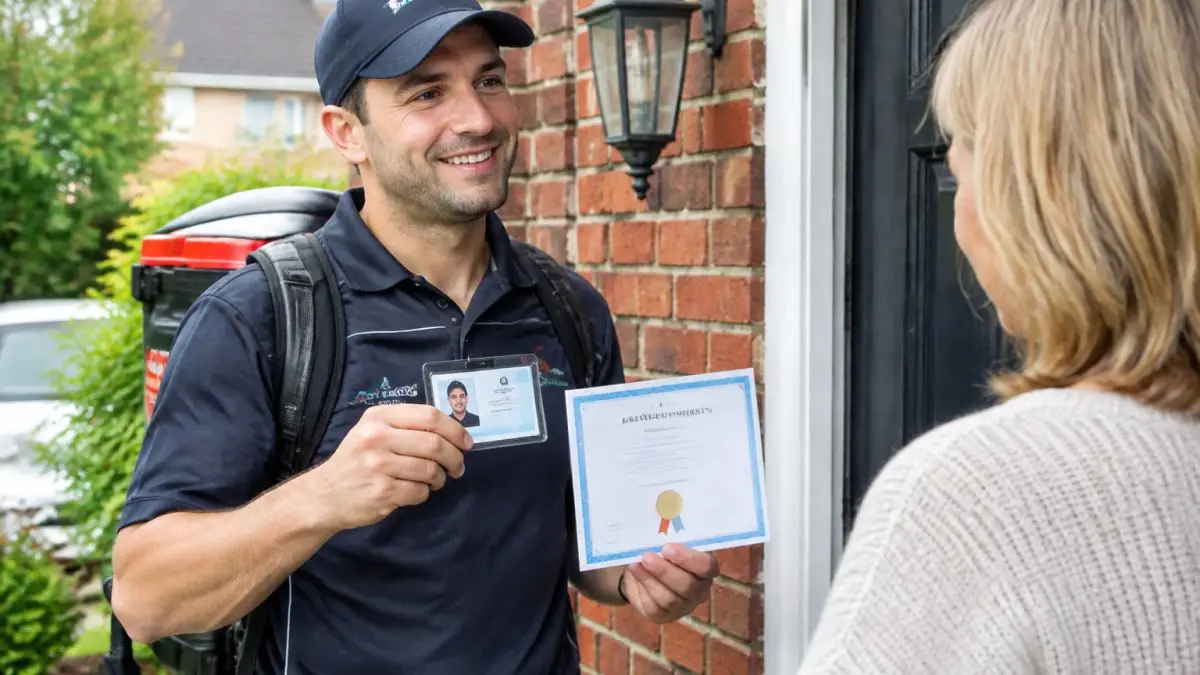
At ProPest Oxford Ltd, our technicians hold a minimum RSPH Level 2 qualification. We are also members of the NPTA and are BASIS PROMPT registered.
How to verify qualifications, insurance and professional registration
Most firms will state their credentials on their website or over the phone. Our guide to hiring professional pest control experts covers the wider checks worth making before you book. The useful step is to check them independently rather than take the claim at face value. Use this verification checklist before you book:
- Ask for the technician’s name and the exact qualification they hold, including the awarding body.
- Ask whether the firm is a member of a recognised trade body such as the NPTA, and check the membership directory on the trade body’s website.
- Ask for the firm’s public liability insurance details, including the insurer’s name and the level of cover.
- Ask whether the chemicals used are applied by someone with the appropriate training.
- Ask for written confirmation of all of the above if you are unsure. A firm that stands behind its credentials will have no difficulty providing them.
Watch out: a firm that cannot name its awarding body, trade body or insurer, or that becomes evasive when you ask for written confirmation, is worth treating with caution regardless of how competitive its quote looks.
Qualifications and professional registration to request
When you call, ask for the following:
- The technician’s name and the qualification they hold, with the awarding body
- Whether the firm is a member of a recognised trade body, such as the NPTA (which certifications apply to residential pest control)
- Whether the firm and its technicians are insured, and for what cover
- Whether any chemicals used are applied by someone with the appropriate training
Pest Identification, Inspection Scope and Treatment Methods
The most useful question you can ask is how the technician will confirm what the pest is. If you are unsure whether you need pest control or rodent control, start with that distinction. Correct identification drives the right treatment. A technician who starts spraying before identifying the species, or who cannot explain what they will look for, is worth questioning.
Ask whether the visit includes a full inspection of the property or only the area you have mentioned. Find out how far the inspection will go: loft, cellar, drains, outbuildings and external walls can all be relevant, depending on the pest.
Treatment methods vary. Some problems are best handled with non-chemical measures such as proofing, sanitation advice or monitoring (How to control rodents safely and effectively). Others need targeted treatment. Ask which methods are proposed and why. A good technician will explain the reasoning and offer alternatives where they exist.
Focus on identifying the source of the infestation rather than just the symptoms.
Pest Control Treatment Safety for Children, Pets and Vulnerable People
Safety questions matter most if you have children, pets or anyone with a health condition at home. Ask the technician which products they plan to use, how they will be applied, and how long people and animals should stay away from treated areas.
Ask specifically about any residents who have asthma or other respiratory conditions. If someone in your household is sensitive to strong smells or airborne particles, say so before the visit. A good firm will adjust its approach and tell you what to expect.
Pets need particular attention. Ask whether pets should be kept out of rooms during and after treatment, and whether any food bowls, bedding or toys should be covered or moved. Ask how long the area should stay closed off.
Safe pest control around children and pets is a planning question as much as a product question. Our safe pest control guide for children and pets explains what to prepare before a visit. Get the preparation instructions in writing before the technician arrives so everyone in the house knows what to do.
How to Compare a Pest Control Quote Checklist
Quotes are hard to compare when firms describe the work differently. Before you accept a price, check what it includes.
Use this checklist when you receive written quotes:
- What is the total price, and does it include VAT where applicable?
- Is there a call-out or inspection fee, and is it deducted from treatment costs?
- How many treatment visits are included?
- Are follow-up visits and any re-treatment included in the quote?
- Does the quote name the pest, the method and the areas to be treated?
- What guarantee or repeat-visit policy applies?
- When can the work start, and how long will it take?
How to compare written quotes and treatment plans
Comparing headline prices alone will mislead you. Two quotes for the same pest can differ once you account for what is included, what is excluded and what happens if the problem persists. Put the quotes side by side and compare them on these points:
- Scope of inspection: Does the quote include a full inspection of the property, or only the room you mentioned? A cheaper quote that inspects less may miss the source of the infestation.
- Treatment method: Does the quote specify the method and the product, or does it say only ‘treatment’? A plan that names the method and explains why it suits the pest is easier to hold the firm to.
- Number of visits: Count the visits included, not just the first one. Some pests need two or three visits over several weeks, and a quote that includes only one visit may leave you paying for the rest.
- Follow-up and re-treatment: Check whether follow-up visits are included or charged separately, and what the firm’s policy is if pests return within a stated period.
- Exclusions and extra charges: Look for exclusions such as proofing work, access equipment, or treatment of outbuildings. Ask what would trigger an extra charge and how much notice you would get.
- Guarantee terms: Compare what each guarantee covers, how long it lasts, and what you must do to keep it valid.
- Response times: Ask how quickly the firm will return if you report a problem, and whether that is stated in the quote.
A common pattern is for the lowest quote to include the fewest visits and the narrowest guarantee. That is not automatically a bad deal, but you should know what you are trading away. If a quote is vague on any of these points, ask the firm to put the detail in writing before you compare it with the others.
Pricing depends on the pest, the size and layout of the property, access and how many visits are needed. For current prices or a quote for your situation, contact ProPest Oxford Ltd directly.
Follow-Up Treatment, Guarantees and What Happens If Pests Return
Ask what happens if the problem is not solved after the first visit. Many pests need more than one treatment. Find out whether follow-up visits are included and what the terms are for a return.
Ask the technician to explain any guarantee in plain terms. What does it cover, and do you need to pay again if the pests come back? Get the answers in writing.
Be cautious of any firm that cannot explain its follow-up process. Your own observations are useful, so note any new activity and report it promptly.
Booking Your Pest Control Visit With Confidence
Once you have answers to these questions, you can book with confidence. Ask for a clear summary of the agreed work, the date and time, and what you need to prepare. If anything in the summary does not match what you discussed, raise it before the visit.
ProPest Oxford Ltd offers same-day or next-day appointments, and our services are available seven days a week. Our technicians focus on identifying the source of the problem rather than just the symptoms. You can book a visit and ask any of the questions in this guide when we speak.
Contact ProPest Oxford Ltd today to arrange a visit that suits your home or business.
Frequently Asked Questions
What should I ask a pest control technician before booking?
Ask what pest they believe is present, how they will identify its source, which treatment methods they plan to use, and whether those products are safe around children and pets. Ask for their qualifications, whether they are insured and registered with a recognised professional body, and what the written quote includes. Also ask whether a follow-up visit is included and what happens if the problem returns. Clear answers to these questions show whether a technician is likely to solve the problem properly rather than only treat the symptoms.
How do I check whether a pest control technician is qualified?
Ask which qualifications the technician holds and request evidence of them. Ask whether the company is insured and whether the technician is registered with a recognised professional body. Ask how long the company has operated and whether it carries public liability insurance. A reputable provider will answer these questions directly.
What should a pest control quote include?
A written pest control quote should state the pest being treated, the inspection scope, the treatment methods and products to be used, and the number of visits included. It should also explain any call-out fee, how the cost is calculated, and whether follow-up treatment is covered. Compare quotes on what is included rather than the headline figure alone. Pricing depends on the property, the pest involved and the work required, so visit the ProPest Oxford website or request a quote for current prices.
Does pest control usually include a follow-up visit?
Many treatments need a follow-up visit to confirm that activity has stopped, because a single visit does not always eliminate every stage of a pest’s life cycle. Ask whether a follow-up is included in the quote, when it would take place and whether any extra charge applies. Also ask what the guarantee covers and how the company handles pests that return within the agreed period.
